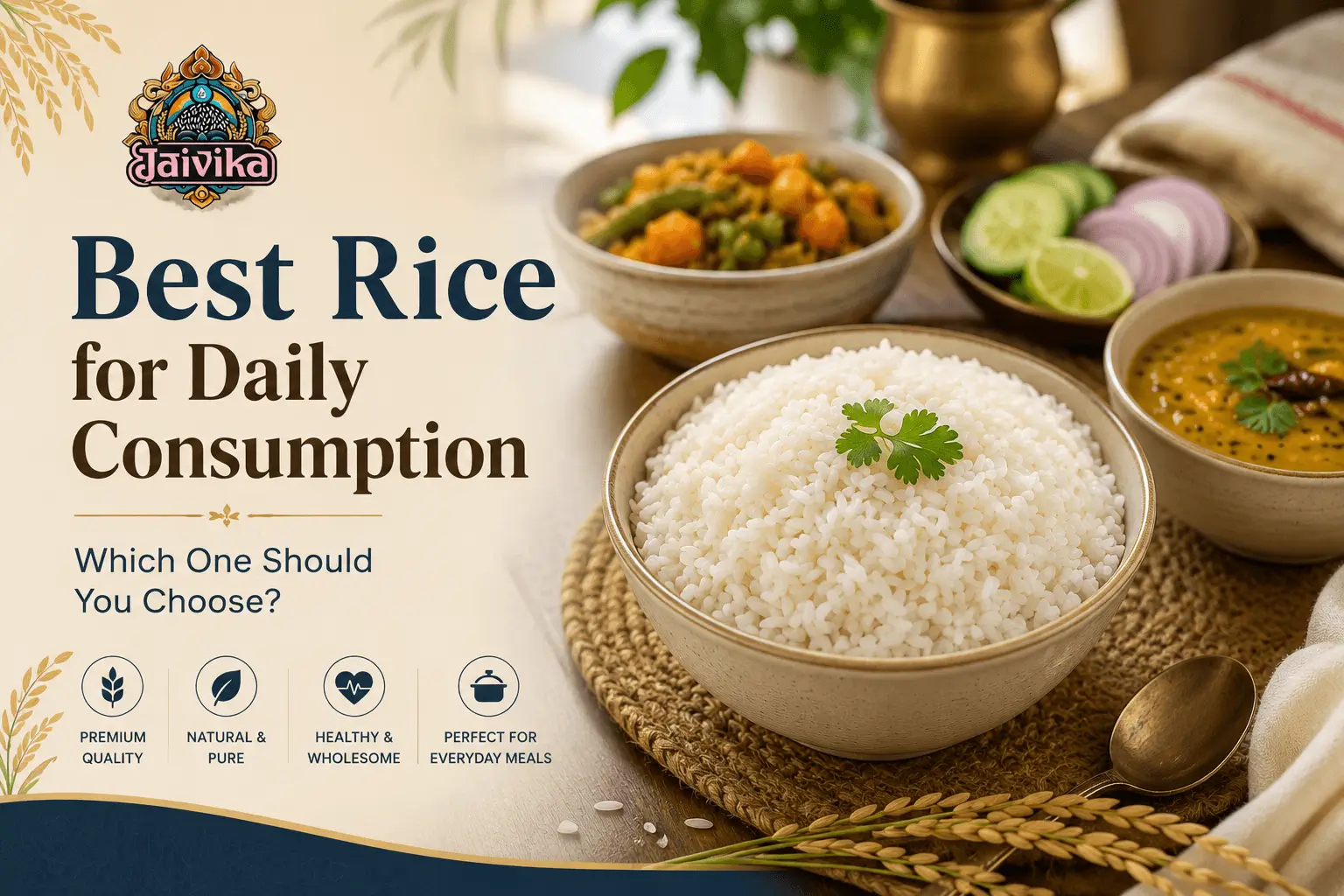
Best Rice for Daily Consumption: Which One Should You Choose?

Rice is one of the most commonly consumed foods in the world, especially in Indian households. But with so many varieties available, choosing the right rice for daily consumption can become confusing. Some rice varieties are better for regular meals, while others are more suitable for biryani, festive dishes, or occasional cooking.
In this guide, we’ll break down the best rice options for daily use, their benefits, and which type may suit your lifestyle and cooking habits.
What Makes a Rice Variety Good for Daily Consumption?
A good everyday rice should ideally be:
- Easy to digest
- Comfortable for regular eating
- Affordable for long-term use
- Suitable for common dishes
- Light on the stomach
- Consistent in texture and taste
Many people make the mistake of buying premium biryani rice for daily meals. That’s unnecessary and expensive. Daily-use rice should focus more on practicality and nutrition than luxury aroma or extra-long grains.
1. Sona Masoori Rice – Best Overall for Everyday Use
Sona Masoori is one of the most popular rice varieties for daily meals in South Indian homes. It is lightweight, less starchy, and easier to digest compared to heavier rice varieties.
Why People Prefer Sona Masoori
- Soft and fluffy after cooking
- Light on the stomach
- Works well with dal, curry, sambar, and rasam
- Lower starch content compared to many other white rice varieties
- Suitable for regular lunch and dinner meals
Best For
- Everyday home cooking
- South Indian meals
- Families looking for lighter rice
Common Dishes
- Plain rice meals
- Lemon rice
- Curd rice
- Tomato rice
- Pongal
If you want one rice variety that balances affordability, taste, and comfort for daily eating, Sona Masoori is usually the safest choice.
2. Basmati Rice – Better for Special Meals Than Daily Use
Basmati rice is famous for its aroma and long grains. It’s excellent for biryani and pulao, but many households avoid using it every day because it’s more expensive and not always necessary for simple meals.
Pros
- Aromatic and flavorful
- Long fluffy grains
- Excellent for festive dishes
Cons
- Higher cost
- Can feel too dry for some regular meals
- Better suited for biryani than everyday sambar-rice combinations
Best For
- Biryani
- Fried rice
- Pulao
- Special occasions
Using premium basmati daily is like using a luxury car for grocery shopping. It works, but it’s inefficient.
3. Brown Rice – Better for Health-Conscious Diets
Brown rice contains more fiber because the outer bran layer remains intact. It is often chosen by people focusing on weight management or higher-fiber diets.
Benefits
- Higher fiber content
- More filling
- Less processed
Downsides
- Longer cooking time
- Harder texture
- Not preferred by everyone in taste
Best For
- Fitness-focused diets
- Higher fiber intake
- Meal prep routines
Brown rice is healthier on paper, but many people quit eating it because they dislike the texture. Sustainability matters more than forcing a diet you won’t maintain.
4. Ponni Rice – Common Daily Rice in South India
Ponni rice is another widely used daily rice variety, especially in Tamil Nadu and nearby regions.
Why People Use It
- Slightly firmer texture
- Good for traditional meals
- Pairs well with curries and gravies
Best For
- Traditional South Indian dishes
- Larger family meals
- Budget-friendly cooking
Which Rice Is Actually Best for Daily Consumption?
There’s no universal “best” rice. It depends on your priorities.
| Priority | Best Rice Option |
|---|---|
| Light everyday meals | Sona Masoori |
| Premium taste and aroma | Basmati rice |
| Higher fiber and fullness | Brown rice |
| Traditional South Indian meals | Ponni rice |
| Budget-friendly family cooking | Sona Masoori or Ponni rice |
For most Indian households, Sona Masoori remains the most balanced choice for daily use because it’s practical, versatile, and easier to eat regularly.
Tips for Buying Good Quality Rice
Check Grain Consistency
Good rice should have uniform grain size. Mixed broken grains usually indicate lower quality.
Avoid Excessive Artificial Shine
Overly polished rice may look attractive but can lose nutritional value.
Smell the Rice
Fresh rice should have a clean natural aroma without chemical or stale odors.
Buy From Trusted Brands
Low-quality rice often contains inconsistent grains, excess starch, or poor storage quality.
Final Thoughts
Choosing rice for daily consumption is less about marketing and more about what realistically fits your meals, digestion, budget, and lifestyle.
For most families:
- Sona Masoori is the best all-round daily rice.
- Basmati rice is better reserved for special dishes.
- Brown rice works well if you genuinely enjoy eating it consistently.
- Ponni rice is excellent for traditional South Indian cooking.
The best rice is the one you can comfortably eat regularly without overspending or compromising your meals.